Gayton McKenzie accused of not understanding fashion industry after his meeting with Shein
Fashion designer David Tlale said he doesn’t think Gayton McKenzie understands the complexities of the clothing and textile industry.



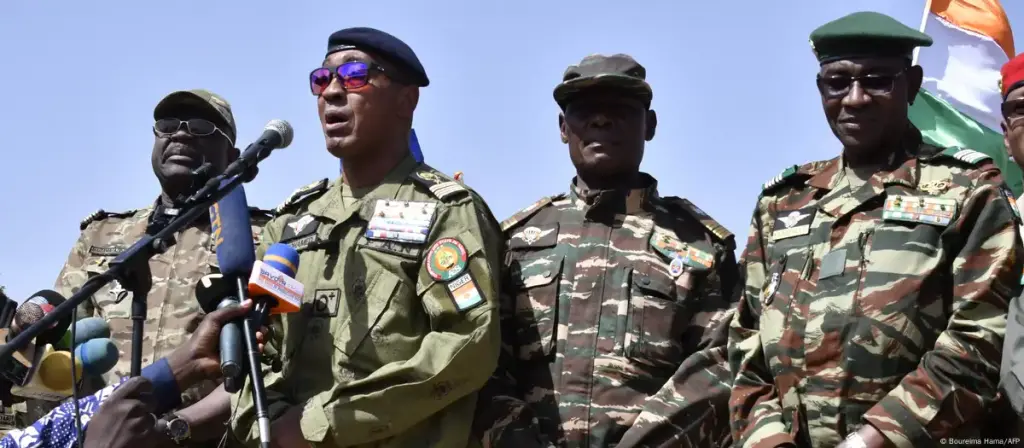
As Niger marks two years since the July 26, 2023 coup, the military junta faces a critical test. Has life improved under their rule — or has the promise of change fallen flat?
On July 26, 2023, Niger was thrown into political turmoil. A coup d'état was announced on state television just hours after members of the presidential guard detained democratically elected President Mohamed Bazoum.
The coup was led by the head of the presidential guard, General Abdourahmane Tchiani, with support from elements of the nation's armed forces.
When he took power two years ago, Tchiani justified the coup by citing growing insecurity, harsh economic conditions, and what he described as excessive influence from Western powers, particularly the country's former colonial ruler, France.
Niger has experienced multiple military takeovers in the past, but this time was different: Many citizens took to the streets to show their support for the military leaders.
But in the two years that followed, some analysts say little has changed for the better. "In some cases, the situation has worsened," Mutaru Mumuni Muqthar, executive director of the West African Center for Counter Extremism, told DW.
With the events of July 26, Niger joined the ranks of neighboring Mali and Burkina Faso, which were already under military rule. In early 2024, Niger, along with Mali and Burkina Faso, announced its withdrawal from the Economic Community of West African States, or ECOWAS. The move marked a major shift in the region, deepening the divide between the military-led governments and the bloc pushing for a return to civilian rule.
Job losses in the non-profit sector
Niger's current leadership has forced many nongovernmental organizations, including the International Committee of the Red Cross (ICRC) — which had been assisting more than 2 million people affected by armed conflict — to shut down operations.
For some Nigeriens, especially those who lost their jobs following the leadership change, life has become more difficult.
"Right now, I'm suffering. It's been a year since we stopped," said Souley, 35, who lost his job as a nutrition researcher at a local NGO after the coup, in an interview with DW.
Mahamane, 32, also lost his position as an assistant coordinator at an NGO based in Tillabéri. "Right after the coup, funds weren't coming in regularly, and our activities were delayed," he said. "Finally, they decided to stop funding altogether.”
"There is a very constricted space for civil society or NGO work, so there are a lot of job losses in that space," said Muqthar from the West African Center for Counter Extremism.
Niger already struggles with high levels of youth unemployment. In 2023, the International Labor Organization estimated that about 23% of Nigerians between the ages of 15 and 29 were unemployed — one of the highest youth unemployment rates in Africa.