Gayton McKenzie accused of not understanding fashion industry after his meeting with Shein
Fashion designer David Tlale said he doesn’t think Gayton McKenzie understands the complexities of the clothing and textile industry.



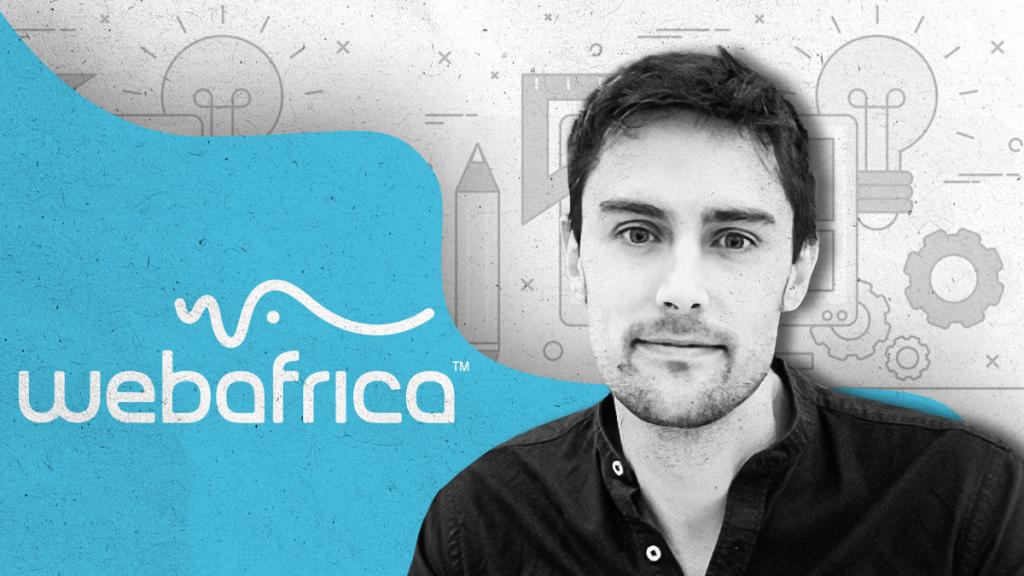
Rupert Bryant is a highly recognised South African entrepreneur who started making a name for himself in telecoms while still a teenager.
Born in Johannesburg in 1986, Bryant’s family moved to Cape Town when he was eight. His passion for computers and the Internet started when he was around ten years old.
In the years that followed, he taught himself to code. By 2000, he dropped out of school and started his own web hosting business. He was just 14 years old at the time.
“I never liked school much. I think it suits some people, but not all,” he told BusinessLive in 2015.
“I’ve always wanted to do things at my own pace and learn my own way to understand how things work. School wasn’t feeding my core interests or passions.”
At 17, he joined up with Webafrica’s Matthew Tagg, who had started his own web hosting service around 1997.
A part-time venture in its early years, Tagg decided to make a serious Internet service provider (ISP) of Webafrica in 2003.
Bryant was Webafrica’s second full-time employee and served as its chief operating officer. His own web hosting business had roughly 30 customers at the time.
The company began with virtually no capital but used its revenue from web development to fund the ISP’s expansion.
“We did it because we knew it was a growing space and was very exciting to us — and because we both had no income and needed to pay the bills,” Bryant previously told MyBroadband.
“We love the Internet and wanted to bring that, delivered through great customer service, to as many people as possible.”
By 2012, Webafrica was making around R130 million in revenue annually and employed 128 people. He stepped down as Webafrica COO the following year.
However, he maintained close ties with Webafrica as a non-executive director and shareholder.

He relaunched online short-term rental business Accommodation Direct, an early competitor to Airbnb in South Africa.
The company saw rapid growth with Bryant’s involvement and was processing around R4 million in bookings a month by 2017, when it was rebranded to Afristay. At that point, it also had over 35 consultants.
It differentiated itself by assigning dedicated booking agents to each customer. By 2019, Afristay was averaging roughly 700,000 monthly web visitors and was aiming for R140 million in bookings for the year.
However, the company was hit hard by the Covid-19 pandemic, which put it in an “utterly non-operational state” and forced it to put most of its staff on unpaid leave.
While lockdowns gradually lifted, many travel accommodation establishments were left permanently damaged and could return their staff levels to pre-pandemic levels.
By late 2023, Afristay had just two part-time staff members and was processing just 30 monthly bookings. It deliberately wound down the business and, by early 2025, shut down.
Despite the setback, Bryant’s business achievements are commendable, especially considering he was self-taught. He considers self-education an essential part of his success.
“I was always a bit of a techie and loved tinkering and understanding how things worked,” he said. “It’s just about being hungry to learn continually.”
Bryant believes being passionate about a venture is a bigger motivator than making money. “Be realistic, but don’t let anyone discourage you,” he said in a previous interview with MyBroadband.
“It also helps a lot to make sure you surround yourself with other talented individuals who support, challenge and help you improve.”
His career achievements have been recognised by various prominent organisations, including being named one of Forbes’ 30 Under 30 for 2015.
On a personal level, Bryant is a mixed martial arts fan and was once an amateur competitor. He also had Western Province colours for submission wrestling.
Alongside Tagg, Bryant took Webafrica from a small upstart ISP to a giant of the business. In 2023, it recorded more than R500 million in turnover.
A further testament to its success is that it could acquire Mweb — once a much larger ISP than Webafrica — in 2023. As of 2025, Webafrica has over 350,000 customers and employs around 500 people.
Issued on MyBroadband by Hanno Labuschagne | https://mybroadband.co.za/news/business/611280-the-man-who-founded-a-web-hosting-company-at-14-and-helped-build-one-of-south-africas-largest-isps.html