Gayton McKenzie accused of not understanding fashion industry after his meeting with Shein
Fashion designer David Tlale said he doesn’t think Gayton McKenzie understands the complexities of the clothing and textile industry.



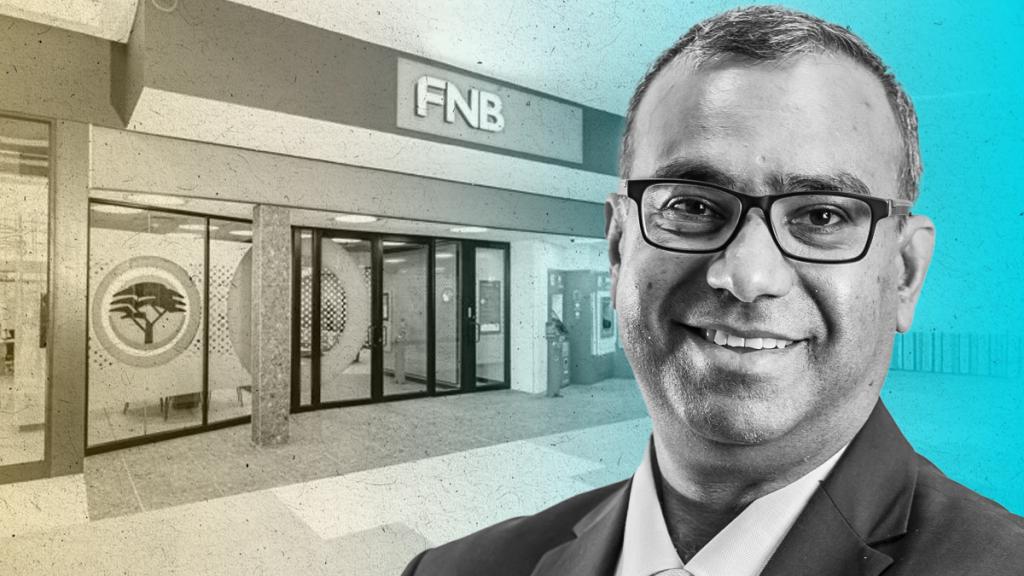
Harry Kellan switched degrees after one year of medical school and is now the CEO of FNB Bank, one of the top-paid banking bosses in South Africa, earning R42 million.
Kellan was born in 1972 in Lenasia, a suburb south of Soweto in the Gauteng province, Johannesburg. His father was a barber in Johannesburg, and his mother was a teacher who focused strongly on education.
“I have my mother to thank for placing a premium on education. She was a teacher, and we grew up with a strong focus on education,” he said.
He noted that, like many Indian families at the time, his parents hoped he would pursue medicine. “Indian families in those days thought highly of the medical profession,” Kellan explained.
“I initially selected medicine and pharmacy as my first two university discipline choices. However, that plan quickly fell apart.”
He struggled with biology, chemistry, and physics, managing only to do well in mathematics, he said.
After his first year, he realised the medical path wasn’t for him. “I had the choice to keep on the path of least resistance and continue to try to become a doctor, or change to a different degree.
“I chose the latter, and it was not easy. It meant accepting failure, disappointing my parents and facing the financial cost of a wasted academic year.”
His father was disappointed with the choice and made it clear he would no longer fully support him financially. Becoming a Chartered Accountant wasn’t seen as prestigious in his community.
“To many European families, becoming a Chartered Accountant is as big an achievement as becoming a doctor. In an Indian family back then, and likely still a little today, it is a very big step down.”
After qualifying, Kellan joined FNB in 2005. Early on, he had to work with people who were older and more experienced than him.
“I had to rewire my brain to the idea that age does not matter and everyone has the right to say something. I also took the time to convince my colleagues that they were working with and not for me.”

Two years later, then-CEO Michael Jordaan offered him the role of CFO at FNB. At just 35, he was nervous about taking on such a big responsibility.
Over time, he developed his own ideas about leadership and strategy. For him, strategy is about clarity of purpose.
“Most people will express their need to achieve growth in earnings or a certain return profile. Those are outcomes, but ultimately your strategy must align with your purpose as a business,” he said.
Kellan also saw banking as more than just finance. It is central to how the economy functions, which drew him in.
“Cash flow is the bloodline of any business, but it’s the bloodline of the entire economy. Without the flow of funds into the economy, where banks play a critical role, you can actually stall an economy.”
He also credits the sector’s resilience to regulation. “We take care of other people’s money. That’s fundamental to what banking is about. And that’s why you’ve got to have regulations.”
Innovation in payments and digital services is one of the areas that excites him. “Payments have to be instantaneous, but safety always comes first,” he said, adding that fraud remains a constant threat.
“Fraud is a business. People invest significant money into that business of fraud. So, we invest significantly to make sure they are not successful.”
Despite the rise of digital banking, he doesn’t believe branches will vanish completely.
“I learned a new word—it’s called ‘phygital’. It’s digital most of the time, but when things go wrong or something is complex, you want the physical too.
The branch will evolve, not disappear, he said.
He takes a similar view on artificial intelligence. “AI won’t take away jobs. People who use AI will replace people who don’t. It saves me hours of work and allows me to focus on more exciting things.”
Kellan served as FirstRand’s CFO for a decade before becoming FNB CEO on 1 April 2024.
With the promotion, his pay rose from R25.9 million to R42.3 million, making him one of South Africa’s best-paid banking bosses.
He believes leadership is less about control and more about empowering others. “Surround yourself with good people, empower them, and don’t be in their way,” he said.
Outside of work, family keeps him grounded.
“My kids keep me grounded. Maybe I’m the CEO at the bank, but at home, I’m last in line. The title doesn’t define who you are as a person.”
Issued on BusinessTech by Malcolm Libera | https://businesstech.co.za/news/banking/837788/the-man-who-changed-his-degree-after-his-first-year-and-is-now-one-of-south-africas-top-paid-ceos/