Issued on Daily Investor by Kirsten Minnaar | https://dailyinvestor.com/business/99275/the-company-looking-to-revolutionise-offices-in-south-africa/



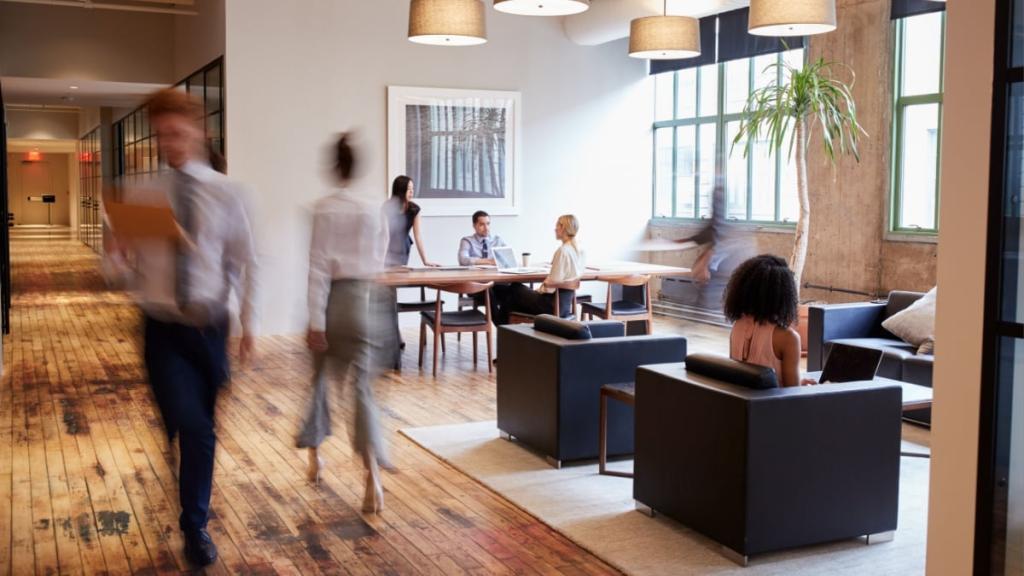
As traditional office spaces are becoming more expensive, many small companies, particularly startups, are opting for flexible, scalable workspaces instead.
Paul Keursten, CEO of Workshop17, which offers fully serviced office spaces, said he has had a front-row seat to the real pressures founders face when building a company from scratch.
“Startups are collapsing under fixed costs before they’ve even found product-market fit, and long-term office leases are a major culprit,” he said.
“The startup graveyard is full of good ideas undone by bad decisions. Most founders obsess over product, funding and hiring. But far too many overlook one of the biggest liabilities on their balance sheet: real estate.”
“Traditional office leases are a serious risk for early-stage companies. Locking into multi-year contracts before finding product-market fit can leave startups exposed to fixed costs they can’t easily adjust when things shift.”
This could result in burn rates spiking, runways shrinking, and founders being forced to make tough trade-offs.
“Commercial real estate was built for the industrial age, not the entrepreneurial era,” Keursten argued.
“Lease terms that span five or ten years might work for banks or law firms, but they’re poison for young businesses still figuring out who they are and where they’re going.”
“Growth isn’t linear, and neither should space usage be. It’s about balancing continuity and flexibility.”
Keursten explained that the Covid-19 pandemic exposed the absurdity of the traditional office model. During the pandemic, many offices sat empty while companies bled cash to keep them.
“Even now, many founders are repeating the same mistakes, lured by shiny buildings and the illusion of legitimacy that comes with a fixed address,” he said.
“They forget the golden rule of early-stage business: cash is oxygen. Don’t waste it on things that don’t move the needle. That doesn’t mean that offices aren’t important; they are, but in a different way.”

Keursten argued that office spaces need to be rethought completely. He believes space needs to be elastic, scalable and on-demand.
“Need a boardroom in Cape Town for three hours? Done. A few hot desks in Sandton for your product sprint next week? Sorted,” he said.
“But it’s not just about drop-in convenience. Growing teams also need secure, fully serviced environments that can flex with their hybrid schedules.”
Whether 100 people rotate through a space designed for 50 or a company expanding into a new market without the burden of underused square metres, the goal is the same: fit-for-purpose space that adjusts as a business evolves.
Flexible workspaces give founders freedom. This allows businesses to grow fast without overheads dragging them down and to experiment without locking themselves into fixed infrastructure.
Startups also have the freedom to fail, pivot, and start again without a landlord breathing down their necks.
“It’s also, in fact, mainly about people. Office space isn’t just a cost centre. It’s a signal. It tells your team what you value. Your team wants a great place to work, where they feel alive, valued, and inspired,” he said.
“Are you investing in flexibility, trust and autonomy? Or are you trying to recreate a 1990s corporate environment in the hope that it’ll impress investors? Spoiler: it won’t.”
Keursten explained that many founders are ditching rigid leases in favour of flexible workspaces that scale with them.
“They’re mixing remote work with physical space in a way that makes sense for how people actually work now. Not how they worked ten years ago. And they’re being brutally honest about what office space is for,” he said.
“Sometimes, it’s about deep focus. Sometimes, it’s about collaboration. Sometimes, it’s just about having somewhere to go that isn’t your kitchen table. But it’s never about permanence.”
The old corporate real estate model assumed that a company would grow in one direction, in one city, at one pace. However, this is no longer true.

This changing approach to office space has opened the door to companies like Workshop17, which offers flexible workspaces.
“We’ve seen what happens when space becomes a strategic asset, not a sunk cost. Startups can grow faster because they’re not weighed down by liabilities,” Keursten said.
Teams can focus better because the space fits the work, and founders can rest easy because they aren’t being dragged down by empty desks.
“This isn’t a fringe idea. It’s the future of work. And the startups that survive the next decade will be the ones that treat space as a variable input, not a fixed expense,” he said.
Startups will build distributed teams, switch cities as opportunities shift, and scale space up or down based on real need, not hopeful projections.
“Of course, there’ll still be founders who sign a five-year lease and fit out an office with kombucha taps and ping-pong tables,” he said.
‘Some of them might even raise another round before the cash runs out. But most won’t, because a startup is not a sure thing. It’s a bet. And smart founders place that bet carefully.”
Keursten urged startup owners to ask themselves whether a space is helping their business move faster or simply making it feel like a “real company” before committing.
“The smartest companies don’t let real estate dictate their pace. They use space like they use capital: precisely, with clear purpose and measurable return,” he said.
“And when they need a place to work, meet or build, they choose partners who understand that flexibility isn’t just convenient. It’s a strategy for long-term resilience and scale.”


Issued on Daily Investor by Kirsten Minnaar | https://dailyinvestor.com/business/99275/the-company-looking-to-revolutionise-offices-in-south-africa/