

26 Mar, 2026

South Africa’s hidden property hotspots

South Africa’s hidden property hotspots

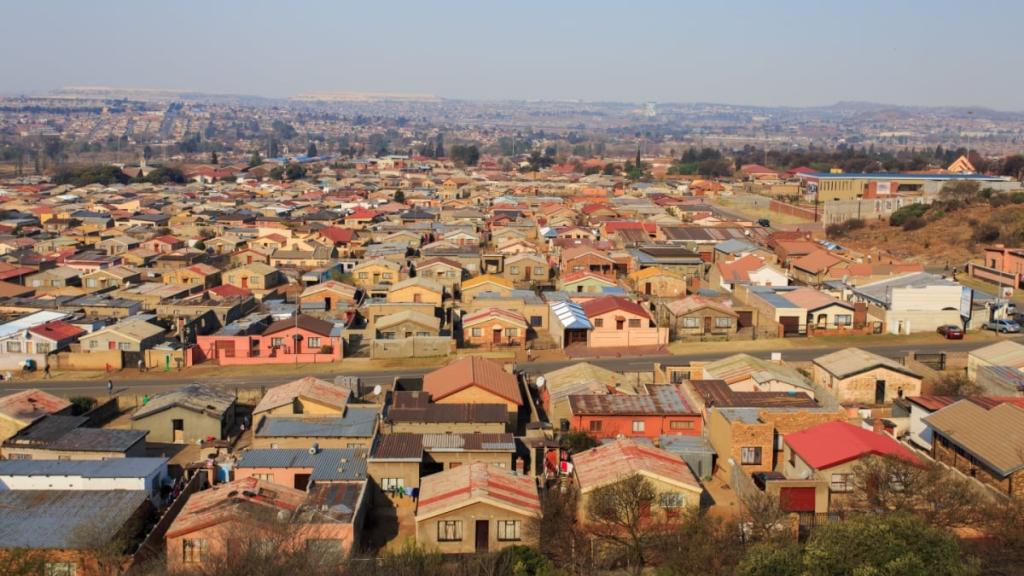
South African townships are booming, with growing populations driving property sales, which can be considerably less expensive than nearby cities.

The average price of a property in Johannesburg is three times the average in Soweto, while Durban’s average property price is double that of Umlazi. The gap between Cape Town and Khayelitsha is much more pronounced at seven times.

“Townships like Soweto, Umlazi and Khayelitsha reflect South Africa’s urban reality in ways that city skylines cannot,” said Hayley Ivins-Downes, Lightstone Managing Executive Real Estate & Director at Prop Data.

“While each carries the weight of inequality and historic disadvantage, they are also centres of growth, resilience and entrepreneurship.”

According to Ivins-Downes, Soweto’s scale and maturity give it an edge in income and property value, but Khayelitsha’s rapid growth highlights the pull of the Western Cape.

“Understanding these dynamics is critical, because the future of South Africa’s property market is as much about our townships as it is about our cities,” she said.


Despite the fact that townships are home to significant portions of the urban population, they are often left out of property conversations.

To help address this gap, Lightstone used the three provinces with the highest GDP and then identified the largest cities before selecting the most populous township in each.

Data was then examined to compare the townships’ population size, household income, property values, and property transfer activity.

Soweto, near Johannesburg, is South Africa’s most well-known township, home to around 1.5 million people.


Its roots can be traced back to the early 1900s, before it was formally named South Western Township in 1963. Today, it’s known for its vibrant cultural life and thriving tourism industry.

Umlazi, located in Durban, has around 486,000 residents and features a mix of urban development and poverty. Umlazi was created in the 1960s and is Durban’s largest township.

Khayelitsha, on Cape Town’s outskirts, is one of the fastest-growing townships and has around 520,000 residents.

The township is characterised by informal housing and strong grassroots activism. Importantly, Khayelitsha is the youngest of the three townships, founded only in the mid-1980s as an apartheid-era relocation zone.

Despite challenges like unemployment and crime, these three townships are hubs of innovation, culture, and emerging entrepreneurship, and play an important role in the country’s evolving urban landscape.


Population and income


Adults make up 66% of Umlazi’s population, lower than Soweto and Khayelitsha, which both have an adult population of 75%.

This may be because many young adults leave Umlazi for jobs in Durban, Gauteng, or Cape Town. Soweto and Khayelitsha, being close to major cities, keep more working-age residents.

Lightstone estimated that Umlazi’s adult population grew by 10% over the last ten years, behind Soweto at 25% and well behind Khayelitsha at 40%. This probably reflects the ongoing inward migration into the Western Cape from other provinces.

Apart from being the oldest township with the largest population, Soweto is also the wealthiest of the three townships when it comes to household income. Khayelitsha is the youngest and the poorest.


More than 20% of Soweto’s households have income exceeding R13,000 a month, similar to Umlazi but significantly in excess of Khayelitsha.

In Soweto, more than 20% of households earn less than R6,500 a month, compared to just under 60% in Khayelitsha and around 45% in Umlazi.


Unsurprisingly, when looking at how townships compare to their nearby cities, Lightstone found that cities are significantly wealthier.

For example, around 25% of Soweto’s residents earn more than R13,000 a month, while in Johannesburg the figure is more than 70%.

But both Soweto and Johannesburg recorded equally small amounts of households earning less than R3,250 a month.

The graphs below show household income in townships Soweto, Umlazi and Khayelitsha, and cities, Johannesburg, Cape Town and Durban.


Household income: Soweto, Khayelitsha, Umlazi


Household income: Joburg, Cape Town and Durban


Property prices

Unsurprisingly, the average property values mirror household income patterns. Soweto, at R585,000, and Umlazi, at R560,000, were relatively close, while Khayelitsha’s average property value trailed at R350,000.

The ratio of households to formal deeds registered property is more favourable in Soweto, at 2.25:1, than in Khayelitsha, at 3.3:1, and Umlazi, at 3.2:1.

According to various media reports, Soweto has seen government-driven upgrades, middle-class housing developments, and even lifestyle estates.

Umlazi also has formal housing areas like Z and BB sections, with government and private property investment. Khayelitsha, on the other hand, is dominated by informal or lower-income RDP (Reconstruction and Development Programme) housing.


This is because Khayelitsha is relatively new compared to Soweto and Umlazi, with its rapid growth post-1994 coming from inward migration, and those looking for work seldom have the financial resources to enter the formal housing market.

The majority of homes in Khayelitsha are valued between R200,000 and R400,000, and the majority of homes in Umlazi are between R400,000 and R600,000.

Soweto’s homes are more expensive, with most valued between R400,000 and R700,000. The township also has 1,600 properties valued at more than R1 million, while Khayelitsha has none.


Interestingly, the average price of a property in Johannesburg is three times the average in Soweto, while Durban’s average property price is double that of Umlazi. The gap between Cape Town and Khayelitsha is much more pronounced at seven times.

This is unsurprising as Khayelitsha is the poorest of the three townships, and property prices in Cape Town have been surging in recent years as the Western Cape attracts people from other provinces.

According to Stats SA, residential property prices have increased by 141% in Cape Town from 2010 to 2022. In comparison, the average metro increased by 98% during the period.

Lightstone found that property transfers in both Soweto and Umlazi have been trending downwards over the past decade, despite the occasional rally.


Transfers in Khayelitsha increased from 2018 to 2022 before falling each year since then. Despite the trend, though, Soweto still accounts for most transfers by some distance.

The graph below compares property values in Soweto, Khayelitsha and Umlazi in August 2025.