Gayton McKenzie accused of not understanding fashion industry after his meeting with Shein
Fashion designer David Tlale said he doesn’t think Gayton McKenzie understands the complexities of the clothing and textile industry.



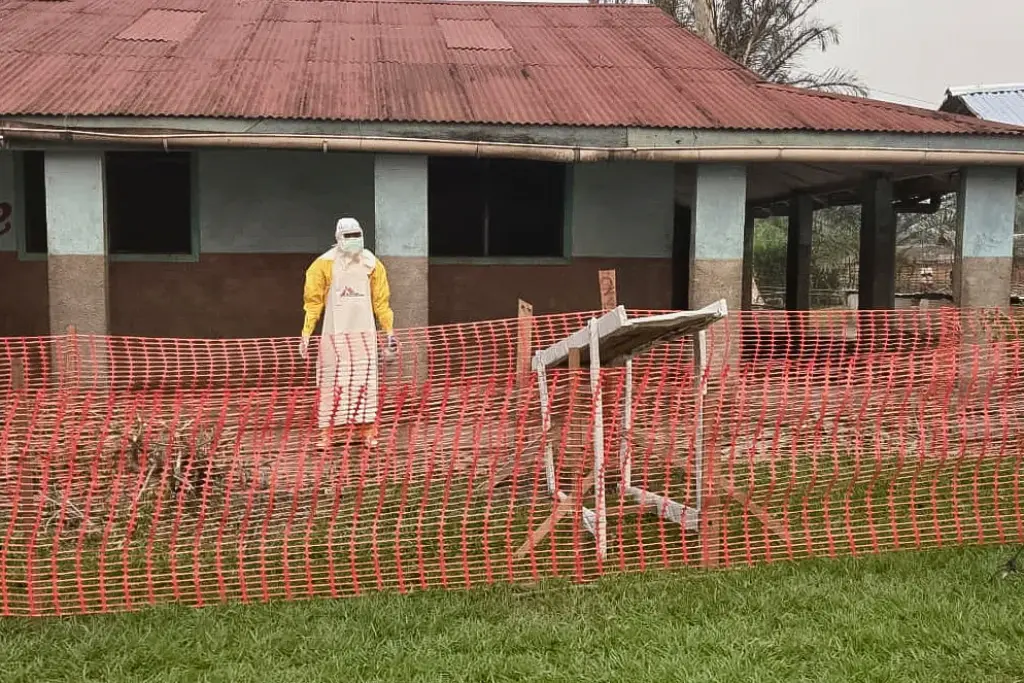
As a deadly new Ebola outbreak kills dozens in southern Congo, health officials and organizations are sounding the alarm, warning that they lack the funds and resources needed to mount an effective response to the crisis.
The World Health Organization reported Wednesday that 57 cases and 35 deaths have been reported since Congolese authorities announced the outbreak on September 4. The mortality rate exceeds 61%.
It is the first Ebola outbreak in 18 years in Kasai province, a remote part of Congo characterized by poor road networks. It is located more than 1,000 kilometers (620 miles) from the country's capital, Kinshasa.
“We urgently need our partners and donors to step up their support for this life-saving response to ensure we can quickly contain the outbreak and protect the most vulnerable communities,” said Susan Nzisa Mbalu, Head of Communications for the International Federation of Red Cross and Red Crescent Societies in Africa (IFRC).
Earlier this week, the IFRC indicated it is appealing for 20 million Swiss francs ($25 million) to help contain the outbreak and aims to reach 965,000 people with urgent assistance. It warned that health facilities are overwhelmed and lack the resources to provide care, with clean water and protective equipment at critically low levels.
According to the IFRC, the only treatment center in the Bulape health zone, where the epicenter of the outbreak has been declared and where the majority of cases are concentrated, is now at 119% capacity.
Health officials are particularly concerned about the impact of U.S. funding cuts, especially given the U.S.'s history of supporting Ebola outbreaks in Congo, including a 2021 effort when the U.S. Agency for International Development (USAID) provided up to $11.5 million to support efforts across Africa.
IFRC's Nzisa Mbalu noted that it is still too early to fully assess the level of donor support for the Ebola response, adding that the organization has so far allocated 1.75 million Swiss francs ($2.2 million) in emergency funding to respond to the outbreak.
Despite the absence of USAID, Mathias Mossoko, the Ebola Response Coordinator in Bulape, noted that the U.S. government has provided “some small support,” although he could not provide specific details.
WHO spokesperson Tarik Jasarevic told the AP on Thursday that the organization's only current funding for the outbreak response is a $2 million emergency fund and about $2.3 million from the United Kingdom, Germany, and the Gavi vaccine alliance.
That's well below the WHO's projected cost of around $20 million to respond to the outbreak over the next three months.
“Without immediate support, operational gaps will persist, jeopardizing efforts to contain the outbreak and protect vulnerable communities,” Jasarevic said.
The Congolese authorities' current national response plan is estimated at $78 million.
Treating Ebola requires “enormous resources,” even for a single patient, said Jean Paul Mbantshi, the chief medical officer of the Bulape health zone. He said the zone desperately needs ambulances to transport patients from remote areas to the hospital before they become highly contagious. Health workers also require more protective equipment, medicines, and additional vaccines.