A war of words over corruption has rattled Kenya's political class after Kenyan President William Ruto accused MPs of pocketing bribes — a bombshell claim that landed as a fresh survey revealed graft-ridden ministries and reignited public anger.
The 2024 National Ethics and Corruption Survey paints a grim picture of daily life in Kenya, showing that citizens are still forced to grease palms just to access basic services — a practice so routine that most victims never bother reporting it.
Despite a decline in average bribe amounts, the practice remains entrenched, with most cases going unreported, according to the survey.
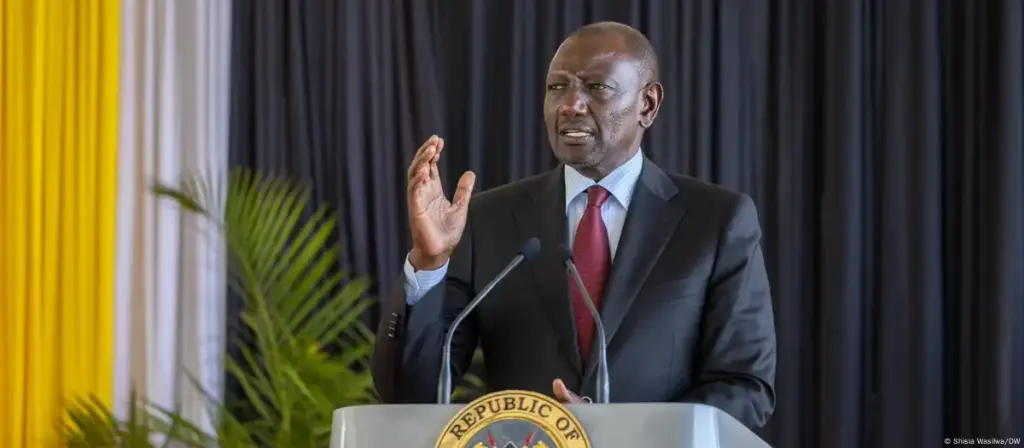
At a joint parliamentary group meeting on August 18, President Ruto claimed that lawmakers were among those taking bribes — sparking outrage in Kenya's parliament but also drawing support from citizens weary of unfulfilled promises on graft.
"There are people who are destroying the credibility of parliament, and they are collecting money in the name of parliament, and most of the time that money never gets to parliament, it gets to a few people," Ruto said.
"We are not going to shame them. We are going to arrest them. Both the givers and receivers must be dealt with."
Demands for proof
Ruto's critics argue the accusations risk politicizing the fight against corruption, while supporters say the remarks expose a truth long whispered in public.
But many legislators in Kenya were quick to push back against the allegations.
Junet Mohamed, the National Assembly's minority leader, called on the president to substantiate his claims.
"The person who is bringing the allegations must come with proof," Mohamed said. "The burden of proof belongs to the person who is coming up with allegations. He who alleges must come with proof — that's all."
Minority Whip Millie Odhiambo reinforced the demand for proof, stressing that corruption must be treated as an individual matter instead of parliament being tarnished as a whole.
"So if someone is corrupt, it is an individual issue; they need to investigate members individually and tell us how they are corrupt, what they were corrupt on, and who gave them that bribery," she said.
Wilson Sossion, a former MP and governance analyst, appeared to agree with lawmakers in rejecting collective blame.
"If we speak factually and we speak truth, corruption is a way of life in all institutions in Kenya, that's a fact, and parliament may not be an exception, and I'm not saying parliament as an institution, individuals can be involved, and when individuals are involved as individuals, the other members may not even know, and when members of the executive are involved the others may not know," he told DW.
Sossion added that the president's sweeping remarks were misplaced: "I think making this allegation collective is not right. If indeed there are individuals who in person are engaged in bribes, then that is not parliament doing it, it is individuals who are in parliament."
The chair of the Ethics and Anti-Corruption Commission, Bishop David Oginde, said that while corruption felt pervasive most Kenyans remained honest.
"So what we are saying is, as a nation, we have got to that place where corruption has become a natural thing, it has become like a normal thing and even as ordinary citizens we seem to celebrate the corrupt, we seem to celebrate people whose wealth we cannot explain how they came about with this," he said.
Oginde pointed to the survey's finding that nearly 70% of Kenyans had not engaged in bribes, noting that, "there is a perception that Kenyans are corrupt but if you look at the majority of Kenyans, we are not corrupt and that's why I think people resonate with the idea of fight against corruption because they can see that there are a few people."
Public divided on Ruto's stance
On the streets of the Kenyan capital Nairobi, ordinary Kenyans expressed mixed reactions to the president's comments.
Mathew Wafula said the president's sharp rhetoric was a change from the consultative tone he had once promised.
"The departure by his excellence the president, from being a consultative and a participatory leader to sustained attacks on parliament, is raising many questions," he noted.
Others insisted that strong action was long overdue. Maxwell Oloo told DW that corruption must be met with consequences. "Those found guilty of corruption should be detained, and the rule of law should take action, and the president has all those commands," he said.
Jeff Mwendwa argued that the president himself had questions to answer. "I don't see how the president should blame the MPs for being corrupt, when he himself is part of the corruption," he claimed.
Kenya loses billions of shillings each year to corruption, money that economists say could otherwise fund health care, education, and infrastructure.