Gayton McKenzie accused of not understanding fashion industry after his meeting with Shein
Fashion designer David Tlale said he doesn’t think Gayton McKenzie understands the complexities of the clothing and textile industry.



They had a lot to say about global affairs. But about the complicated issues happening closer to home? Not so much.
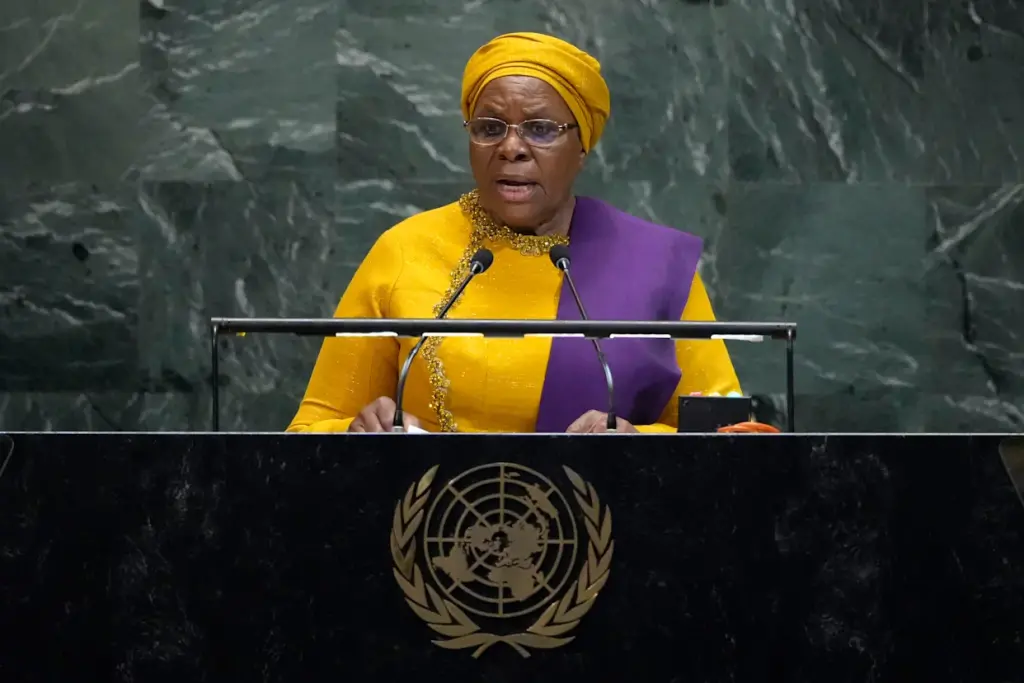
Like their counterparts on other continents, African leaders took to the United Nations podium last week to address the UN General Assembly on pressing global issues, including climate change, inequality, and the spread of conflict.
African leaders, including Nigerian Vice President Kassim Shettima, Senegalese President Bassirou Faye, and Namibian President Netumbo Nandi-Ndaitwah, spoke forcefully about global conflicts and called for an end to Israel's attacks on Gaza.
"The people of Palestine are not collateral damage in a civilization seeking order. They are human beings, equal in worth, entitled to the same freedoms and dignity that the rest of us take for granted," Shettima said last week.
However, analysts point out that two of Africa's most complex conflicts, those in Sudan and the Democratic Republic of Congo, which have left thousands dead and led to a stalemate, were barely mentioned by African leaders.
“African countries have somewhat regressed in their desire to place African issues at the top of the UN agenda,” commented Chris Ogunmodede, an African affairs analyst with experience in African diplomatic circles. “On the most important dates in the UN calendar, there is nothing substantive to say about African issues.”
The war in Sudan, the world's largest humanitarian crisis, erupted in mid-2023 when a paramilitary group launched an attack on the Central African country's armed forces. The two factions had ruled together for years. The conflict quickly escalated into a full-blown civil war, which has now divided the country into two and left at least 40,000 people dead.
The army regained control of the capital at a crucial moment in the war and pushed the Rapid Support Forces rebel group mainly toward Darfur, the western region of the country.
The UN has accused both sides of mass atrocities and warned of famine in parts of Sudan, as both groups have imposed restrictions on food and aid distributions while the fighting continues. A drone strike earlier this month killed at least 70 people in the besieged El-Fasher.
In January, the Rwandan-backed M23 rebel group launched a series of attacks in eastern Congo and quickly captured key cities. Since then, approximately 7,000 people have died in the conflict, while millions more have been displaced or trapped in rebel-held cities.
According to the UN, more than 100 rebel groups are fighting in the mineral-rich eastern Congo. A peace initiative in Doha reached an agreement between Congo and the M23 group, but fighting continues.
“The cursory mentions of the Democratic Republic of Congo and Sudan were a missed opportunity for African leaders to truly highlight how pronounced the humanitarian crises have become,” said Beverly Ochieng, senior security analyst at Control Risks.
External interests
According to analysts, the speeches at the General Assembly demonstrate African leaders' lack of interest in resolving these conflicts. They also reflect institutional problems within the continent's own multilateral organizations, where African leaders are absent from the negotiating table.
"We see the reality of the limitations of African institutions and states, the limitations of their own capacity to manage their international affairs," Ogunmodede said.
The main negotiations for the conflicts are being led by outside powers, some of which have been accused of being part of them. This week, outside the UN, a group of diplomatic leaders from the United States, the United Arab Emirates, Saudi Arabia, and Egypt are intensifying efforts to end the war in Sudan. A peace agreement between Congo and Rwanda, led by Washington, is expected to be signed in the coming weeks.
Since the outbreak of both wars, they have rapidly acquired complex geopolitical dynamics with several competing powers. The UN said Rwanda supports the M23 rebel group in Congo, and the conflict has also affected neighboring countries such as Burundi and Uganda.
In March, the Sudanese armed forces filed a case with the UN's highest court against the United Arab Emirates, accusing it of arming its main adversary and violating the genocide convention. The UAE denies the accusations.