Gayton McKenzie accused of not understanding fashion industry after his meeting with Shein
Fashion designer David Tlale said he doesn’t think Gayton McKenzie understands the complexities of the clothing and textile industry.



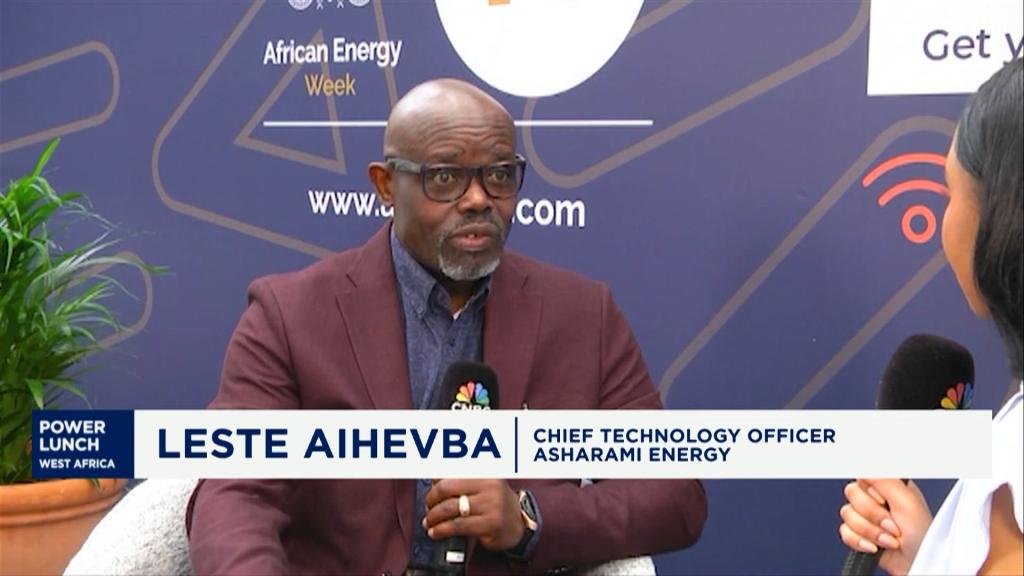
The Chief Technical Officer of Asharami Energy, Leste Aihevba, says integration across Africa, even from an energy perspective, goes far beyond energy. Speaking to CNBC Africa at the Africa Energy Week, he highlights that inter-country collaboration and seamless policies are critical to unlocking the continent’s full potential.
At the Africa Energy Week, Lester Aihevba, Chief Technical Officer of Asharami Energy, highlighted the necessity of integrating multiple sectors for the successful progression of Africa's energy landscape. Speaking with CNBC Africa, Aihevba emphasized that unlocking Africa’s full potential requires transcending beyond traditional energy frameworks to embrace holistic collaboration and cohesive policies across the continent.
"Integration across Africa, even from an energy perspective, is way beyond just energy," Aihevba asserted. I have highlighted the structural challenges endemic to the continent, such as intercountry travel barriers, which stimulate investment and collaboration. According to Aihevba, these hurdles force potential investors to remain in localized environments, limiting expansive regional growth. "Imagine an investor from Angola wanting to invest in Nigeria or Ghana but facing numerous bottlenecks just to travel," he exemplified.
The CTO pointed to the role of regional bodies such as the Economic Community of West African States (ECOWAS) in fostering intercountry collaboration. By advocating for unified, streamlined policies, these organizations can facilitate seamless integration conducive to both economic and energy development.
Aihevba also praised Nigeria's Petroleum Industry Act (PIA) as a monumental step towards improving the national energy landscape. Describing it as a 'game changer,' I have outlined how the Act allows for stabilizing policies that attract both local and international investors. "The objectives of the Industry Act were to make Nigerian energy local players more relevant and to make international investors more comfortable with investing," he explained. Resulting from this legislation has been a notable increase in local participation and a gradual influx of significant foreign investment, propelling Nigeria towards ambitious targets of reaching 2.5 to 3 million barrels by 2020.
In addressing the exploration and exploitation of untapped reserves, Aihevba noted the technological and resource challenges, particularly with respect to global shortages in drilling rigs. Companies like Sahara are countering this by increasing their proprietary equipment investments, intending for a 20-30% uptick in resource availability from the existing 7 rigs by 2024. Such moves, Aihevba argues, are crucial to accessing and harnessing Africa's abundant yet latent reserves.
Further, Aihevba explored the prospects for local content development within the energy sector. I have cited the withdrawal of International Oil Companies (IOCs) from onshore activities as a facilitative opportunity for local operators and service providers to enter the market bravely. "We've had 3 to 4 major IOCs pull out, yet local operators are stepping in and maintaining, even growing production," he reported.
Looking ahead to 2030, the year African Energy Week has earmarked for ending energy poverty, Aihevba envisioned robust growth in energy access and industrialization across Nigeria and the continent. He stressed energy's pivotal role as a catalyst for socio-economic development. "Energy is a major catalyst to human development. It is essential for lifting the continent out of energy poverty and enabling industrialization," Aihevba said. His vision encompasses greater energy penetration into local communities to empower small and medium-scale enterprises, fostering broad-based economic growth.
Lester Aihevba’s insights mean a future where Africa's energy interconnectivity catalyzes the continent's broader economic and social advancements—fulfilling both immediate energy needs and long-term developmental aspirations.