Gayton McKenzie accused of not understanding fashion industry after his meeting with Shein
Fashion designer David Tlale said he doesn’t think Gayton McKenzie understands the complexities of the clothing and textile industry.



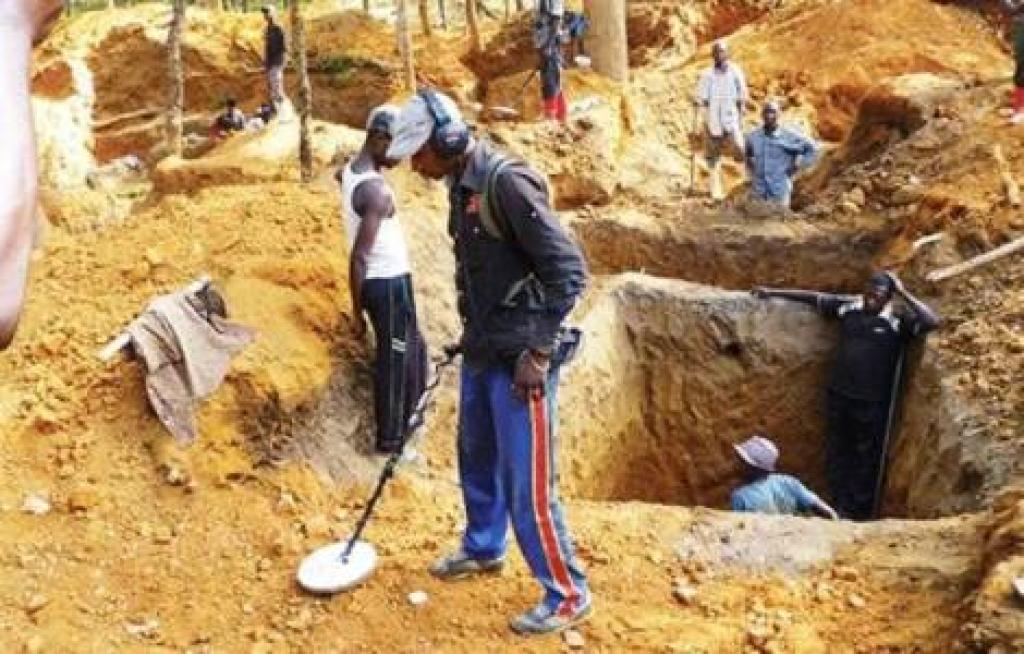
At least 78 illegal miners have lost their lives at the Stilfontein gold mine in South Africa, after police closed access to the mine in August 2024, forcing them to leave and surrender to authorities.
Since that date, nearly 2,000 illegal miners have left the mine, after South African authorities decided to block access to curb the growing illegal mining trade, which, according to the Minister of Mines, has cost the country's economy more than $3 billion in 2024 alone.
Those who have left this mine have described a terrifying situation. The mine consists of a vertical shaft about 2.6 km deep. When the police closed access, the miners were left without the food and water supplies their accomplices sent from above. Dozens of people died of starvation, the stench of their corpses mingling with that of the living, who had been unable to wash for months.
Among those who surrendered to authorities was the alleged leader of the illegal mining gang, a Lesotho citizen known as "Tiger." However, he was found missing from his cell at the police station where he had been detained, raising suspicions of complicity among police officers.
"Tiger's" escape has fueled suspicions about the existence of a criminal network that, for years, has plundered some of the country's 6,000 abandoned gold mines in search of remaining deposits. These mines, which large companies have stopped exploiting due to the lack of industrial profitability, continue to be targeted by criminal organizations that employ precarious labor.
Bishop Sithembele Anton Sipuka of Mthatha, addressed the Stilfontein tragedy in early January, stressing that "the saga of illegal mining in Stilfontein is an overly complex problem." In a statement, he explained: "This is an economic system that allows large mining companies to maximize their profits at the cost of environmental destruction, without improving the living conditions of local communities, while repressing the poor who are trying to make a living."
The bishop also emphasized other aspects of the problem, such as "the issue of legality regarding people entering the country illegally, as many of the illegal miners are foreigners. There are also criminal syndicates that exploit the poor in pursuit of huge profits. And finally, the problem of trapped miners who refuse to leave or are forced to remain underground."
According to Bishop Sipuka, while the media focuses on the government's actions, "the responsibility of the mining companies, which have left these mines unrehabilitated and accessible to anyone, is rarely mentioned. The law should hold them accountable." He also suggests that the possibility of repurposing these old mines to generate new jobs should be considered.
"Instead of focusing solely on the current crisis of the trapped miners, who are only the weakest links in this chain, the police should investigate the criminal organization behind all this and bring them to justice," the bishop concludes.